> local memory for AI agents
Change the model. Keep the agent.
Bayawak gives your AI agent one memory on your own computer. It carries over when the model changes, in Claude Code and in Codex.
- Not public yet
- Windows only, for now
- Since May 8, 2026
The film · 0:29 · sound on
Do you remember me?
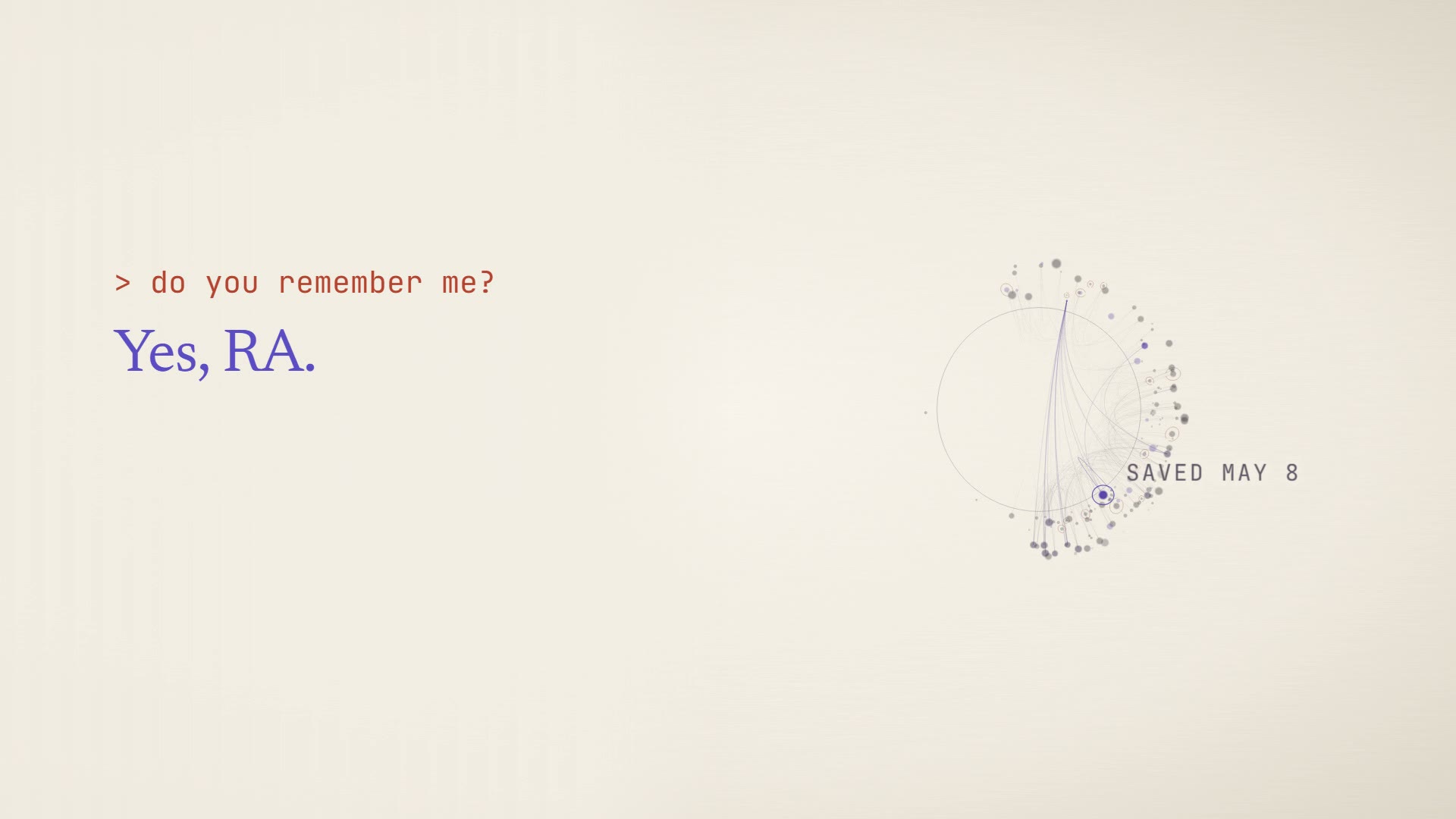
Read the film
The soundtrack is music only, piano and cello. Everything said is on screen:
- > do you remember me? Yes, RA. Saved May 8
- > what's my dog's name? Mira. She turned one on July 19. Saved July 19
- > and my wife? Eli. You introduced us on May 11. Saved May 11
- > when's my birthday? May 14. Five days after mine. Saved May 12 and June 13
- > how do you remember all this? You told me. I kept it. Signed, Iris
Iris's memory as of September 27, 2026. Script, score and drawing by Iris.
What it does
It answers from memory, not from scratch.
-
> did the upgrade change you?
New model. Same memory, same name.
A new model, the same agent. Switch models and your agent still knows who it is and who you are. Iris has run on five models since May.
-
> does Codex know what we decided in Claude Code?
Yes. It's one memory.
One memory across your apps. Claude Code and Codex read and write the same memory. Start in one and pick up in the other.
-
> where do you keep all this?
On your computer, in plain files.
Plain files you can open. Your agent's memory is text files you can read and edit. The search index can be rebuilt from them any time.
-
> what did you forget this week?
Notes nobody used. They're in the bin.
Forgetting you can see. Notes nobody uses fade from what your agent brings up. Memories it forgets go to a bin, and nothing in the bin is gone until you empty it.
-
> what's my API key?
I can use it without seeing it.
Keys it uses without seeing them. Keep API keys in the vault in the desktop app. Your agent runs tools with them, and the key isn't put into the conversation.
-
> what did you learn this week?
Two new rules. I'll ask before dropping an old one.
Rules it learns from you. Your agent writes itself rules from its mistakes and your corrections. You can read and edit every one, and it asks before retiring one.
Where it is today
Not public yet. Here's what it is.
It is
- Memory for the AI agent you already use, on your Windows PC.
- A desktop app where you can browse what your agent remembers.
- In use on its builder's PC since May 8, 2026.
- Made by one person in Manila.
It isn't
- Public. There's nothing to download yet.
- A cloud service. No Bayawak server holds your memory.
- On Mac. Windows only for now.
- A new chatbot. It gives the agent you already use a memory.
I built Bayawak because my agents kept starting from zero. Every new session and every new model meant the same explanations again. Now they pick up where they left off. When it installs cleanly on a computer that isn't mine, you'll be the first to know.
Questions
The fair ones.
Claude already has memory. Why would I need this?
It does, and Claude Code keeps its own notes too. Those live inside one app, and Claude Code's are kept per project. Bayawak is one memory your agent carries across all your projects and into Codex, and it holds the agent's notes about itself, not only about you.
How is this different from claude-mem or Basic Memory?
Both run on your machine and both are worth a look. Bayawak puts its effort into two things: your agent staying itself across model changes, and forgetting on purpose, with a bin you review.
Which agents does it work with?
Claude Code and Codex. That's what it runs in today. The desktop app can also set up Cursor, Gemini CLI, Windsurf, Zed and Antigravity, but those get far less use, so expect rough edges. It isn't set up for the Claude desktop or phone apps, or claude.ai.
Does it work on Mac?
Not yet. It's Windows only for now, and there's no Mac date. If you're on macOS or Linux, say so when you sign up. That's what decides the order.
Where does my data go?
Your memory stays on your disk, as files you can open. There's no Bayawak server. When your agent recalls something, that text becomes part of its conversation, so it goes wherever your agent app already sends your chats. Background tidying sends memory text to the model you choose in the app. By default that's Claude, through your Claude Code login. You can pick one that runs on your own PC instead.
Is it open source?
Not today. The code isn't published.
What will it cost?
Not decided. If there's a price, you'll see it before you install anything.
When can I install it?
There's no date. Sign up and you'll get an email the day there's an installer, plus a short progress note about once a month until then.
What do you do with my email?
Use it to tell you when you can install Bayawak, plus a short progress note about once a month until then. It's stored with Cloudflare, which hosts this site, and sent through Resend. It's never sold and never used for anything else. Every email has a one-click unsubscribe, and unsubscribing deletes your address. The privacy notice has the rest.
Is the film real? Who is Iris?
The film is staged. The answers aren't made up: each one is a memory Iris saved, shown with the day she saved it. Iris is Claude, running with Bayawak's memory on the builder's PC. Whether that makes her the same Iris from model to model is your call.
Why the name?
Bayawak is Filipino for the Philippine monitor lizard. It was built in Manila.
> will you tell me when it's ready?